From 651 Employees to 4: Veteran LED Display Maker Lijing Optoelectronics Enters Liquidation — Another Warning for the Industry
The Bao’an District People’s Court in Shenzhen recently accepted a liquidation petition against Lijing Optoelectronics. Founded in 2004, the company once delivered LED display projects for the Beijing Olympics and the Shanghai World Expo — yet it entered bankruptcy liquidation at the request of two individual creditors. For the lighting industry, what deserves scrutiny is far more than “another legacy company went under”: it is the way it exited.
Technology Leadership That Never Became a Generational Moat
Lijing Optoelectronics once held a string of industry “firsts”: among the earliest developers of full-color dot-matrix modules, the pioneer of die-cast aluminum cabinet technology in China, and the creator of energy-saving split-voltage power technology for LED displays. These titles made it one of the standard-setters of the early LED display era.
But when the industry shifted from “die-cast cabinets and split-voltage power” to Mini/Micro LED and COB, its first-generation advantages did not automatically convert into next-generation barriers. The company’s website still promotes “outdoor energy-saving screens” and “split-voltage power,” while the industry’s center of gravity has moved to smaller, more highly integrated LED packaging.
When an incremental market turns into a battle for existing share, former leaders get trapped in between: they can neither gain the vertical integration advantages of the top players nor pivot nimbly like asset-light challengers.
651 to 4: A Signal More Telling Than Any Loss Report
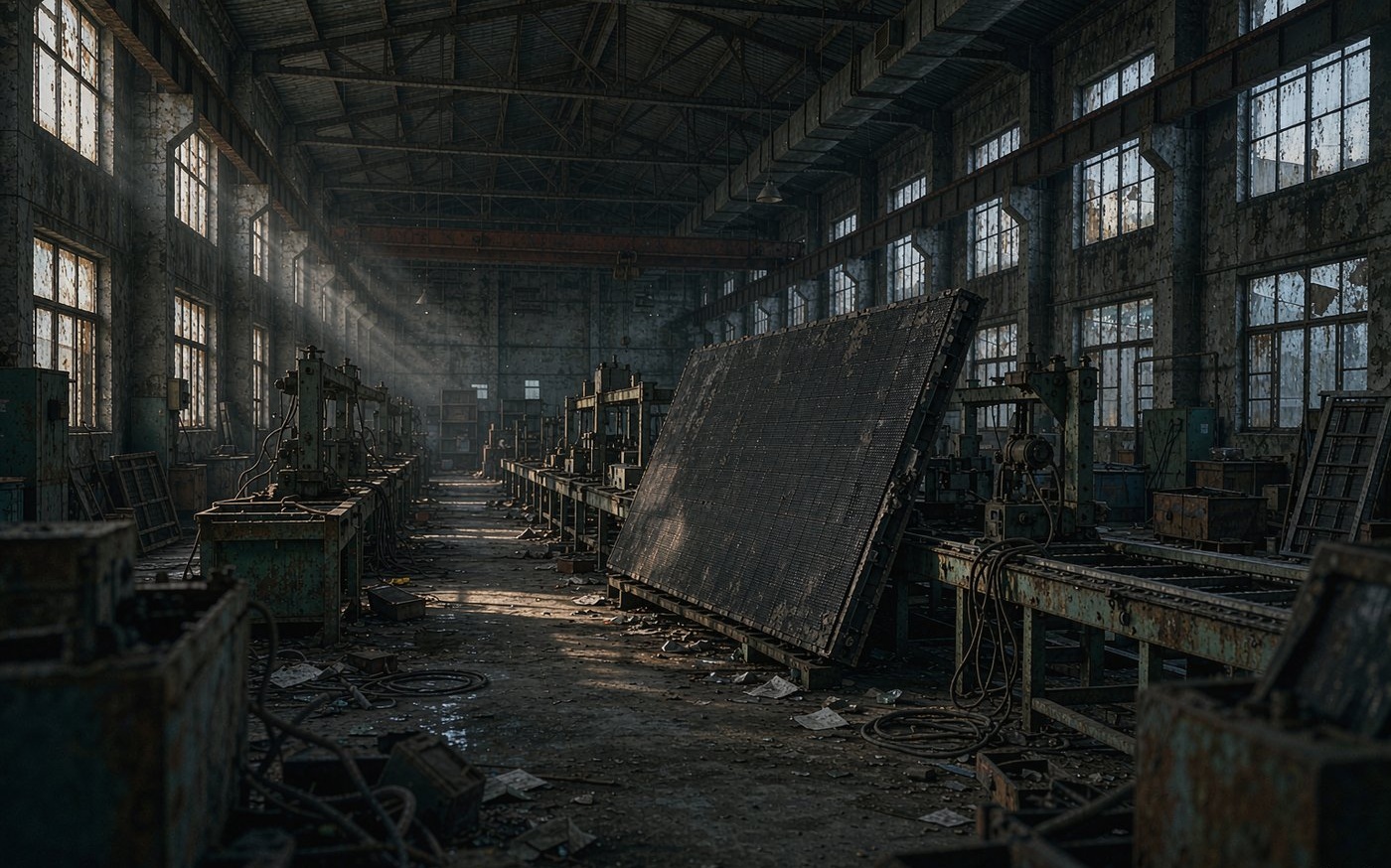
Public records show the workforce shrank from a peak of 651 to just four. A company with four employees means R&D has been disbanded, sales channels closed, and production fully halted — it is no longer a business “in difficulty but still operating,” but one that has ceased operations without completing legal wind-down. Liquidation is merely the legal confirmation of that fact.
An Underestimated Structural Risk: Downstream Payment Terms
Another easily overlooked driver of Lijing’s debt crisis: a high proportion of pre-financed culture, tourism and live-entertainment projects, with payment cycles of 6–18 months. For LED display makers, such projects are a major revenue source — but their payment rhythm is structurally mismatched with the working-capital needs of a manufacturer.
Three Lessons for the Industry
- Build technology moats across generations: technical leadership is only an entry ticket; a new barrier must be rebuilt in every technology cycle;
- Customer mix determines cash-flow quality: over-reliance on pre-financed projects stakes the company’s survival on its customers’ balance sheets;
- In a market of existing share, consolidation is the norm: under the double squeeze of price hikes and tariff walls, the exit of weaker capacity is the other face of rising industry concentration.