Introduction
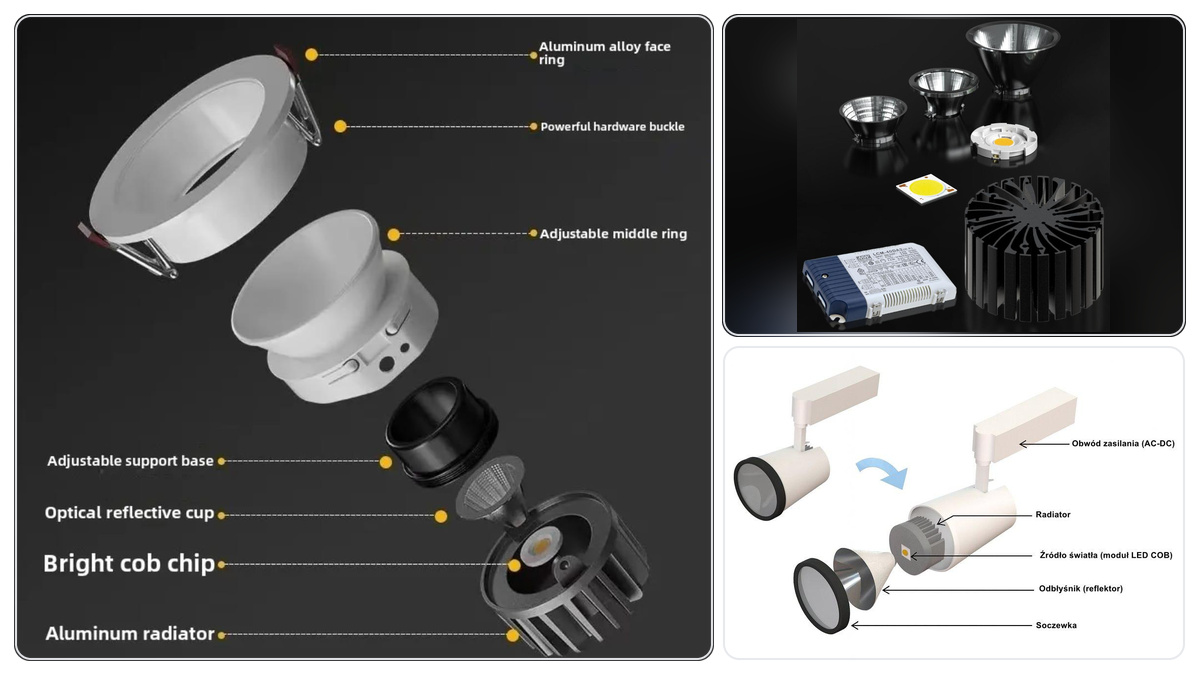
Optical design is an essential part of LED lighting. While the LED source generates light, optical components help direct that light toward the intended area and determine how it is distributed.
In spotlights and downlights, reflectors, lenses, and anti-glare structures work together to create the desired lighting effect. Selecting suitable optical components can help improve light utilization, control beam distribution, and achieve a consistent visual appearance.
Understanding the basic principles of LED optics is useful for lighting designers, product engineers, and luminaire manufacturers.
1. What Are LED Optical Components?
LED optical components are parts designed to control the direction, distribution, or appearance of light.
Common components include:
- Reflectors: Redirect light through reflection.
- Lenses: Change the direction of light through refraction.
- Diffusers: Spread light and reduce the visibility of individual bright sources.
- Baffles and anti-glare structures: Shield the light source from selected viewing angles.
Different luminaires may use one or several of these components, depending on their intended application.
2. Reflectors vs. Lenses
Reflectors and lenses perform similar overall functions but use different optical principles.
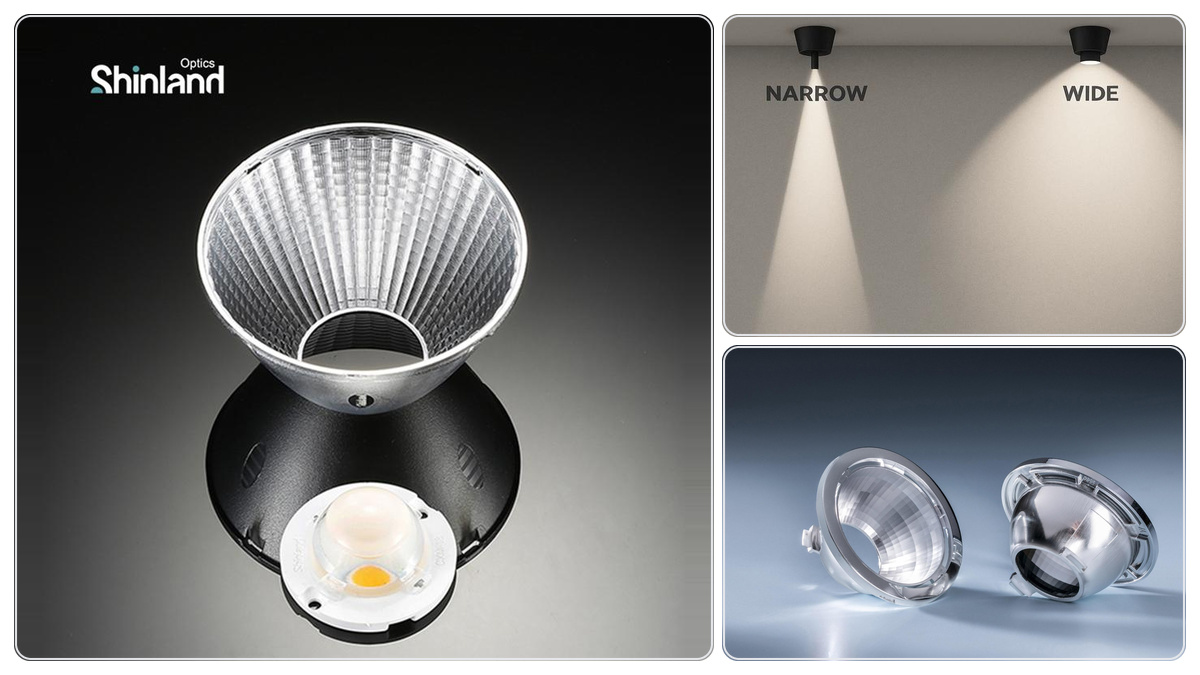
A reflector redirects light using a reflective surface. Its geometry and surface properties influence the resulting beam.
A lens controls light through refraction as light passes through an optical material. Its shape, material, and position relative to the LED source influence the output distribution.
Neither solution is universally better. The appropriate choice depends on the LED package, target beam, available space, cost, and performance requirements.
3. Understanding Beam Angle
Beam angle describes the angular spread of light according to a defined photometric convention. It is an important specification for directional lighting products.
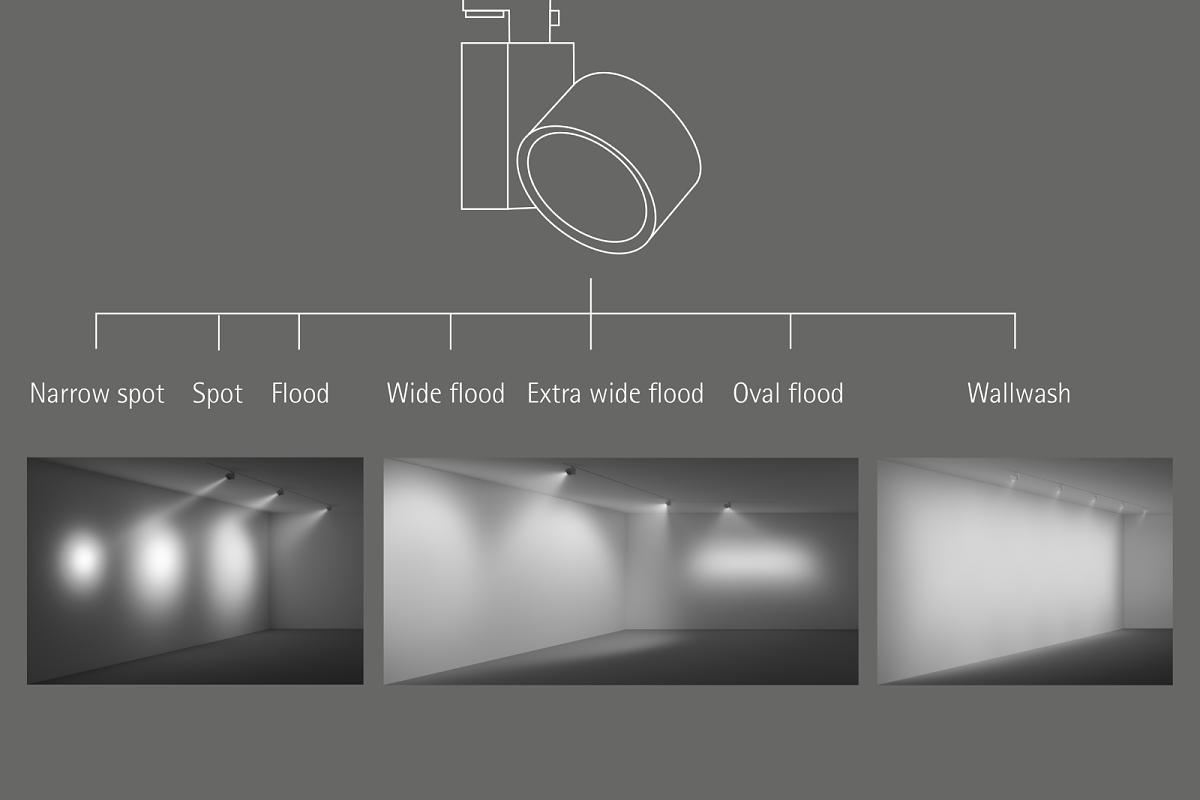
A narrow beam is commonly used for accent lighting, such as highlighting artwork, products, or architectural details. A wider beam can illuminate a larger area.
However, beam angle alone does not describe the complete light distribution. Beam uniformity, intensity, spill light, and the appearance of the beam edge are also important.
4. The Role of Anti-Glare Design
Glare depends on more than the brightness of the LED source. The observer’s viewing angle, the apparent brightness of the source, the surrounding environment, and the luminaire’s shielding geometry all influence visual comfort.
Recessed optics, baffles, and carefully positioned reflectors can help reduce direct visibility of bright components from selected angles.
Anti-glare performance should be evaluated in the context of the intended installation rather than inferred from appearance alone.
5. How to Choose the Right Optical Solution
When selecting optical components, consider:
- The LED source and its emitting-area dimensions.
- The required beam angle and distribution.
- The available installation depth.
- The desired visual effect and glare control.
- The compatibility of optical and mechanical components.
- The need for photometric testing.
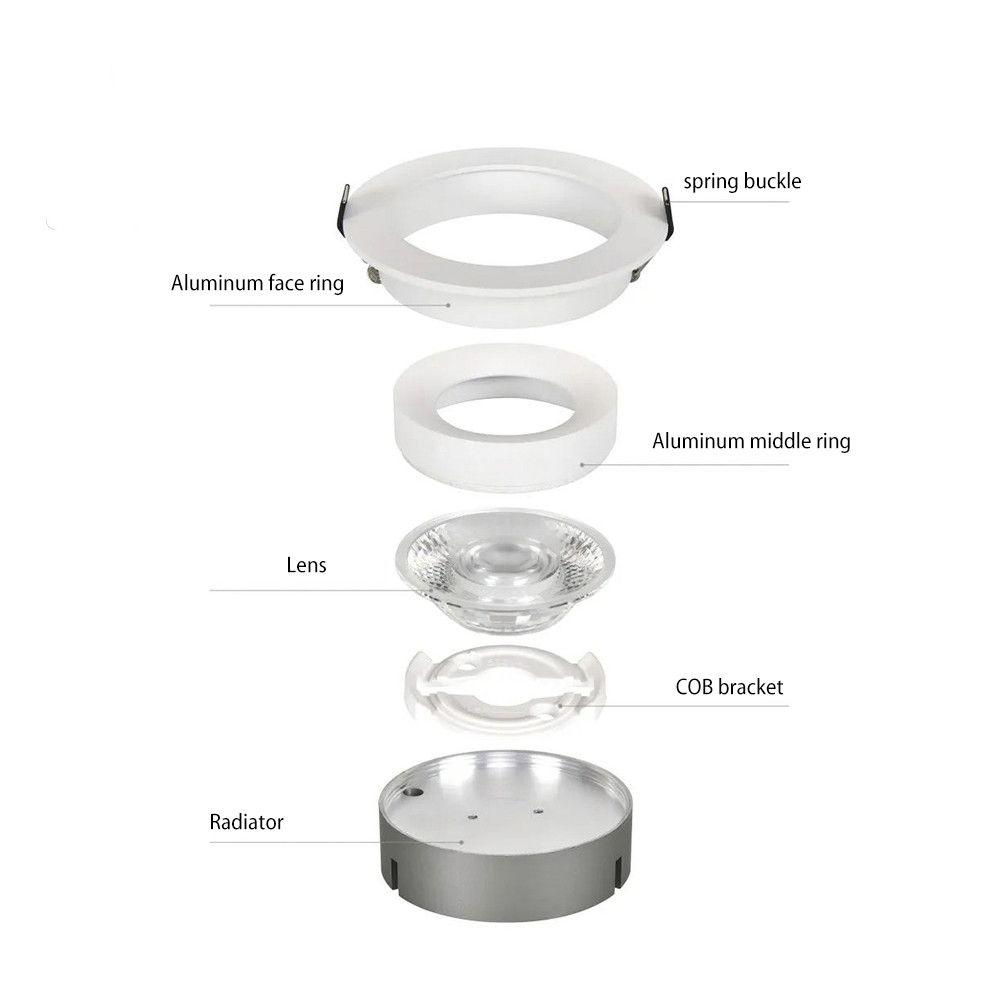
The optical system should be considered together with the LED source and luminaire structure.
Conclusion
Reflectors, lenses, diffusers, and anti-glare structures each have a specific role in LED lighting. Understanding their functions helps manufacturers select suitable components and develop luminaires that meet the intended lighting requirements.
Optical performance is ultimately determined by the complete design, not by any single component in isolation.