Introduction
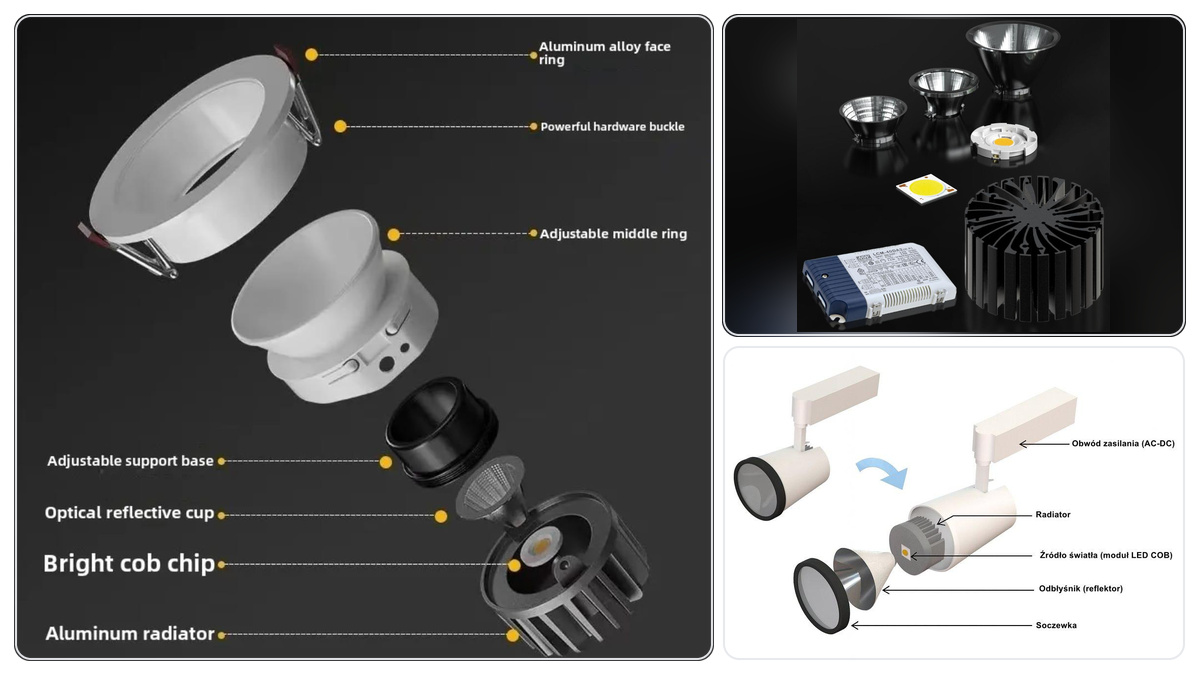
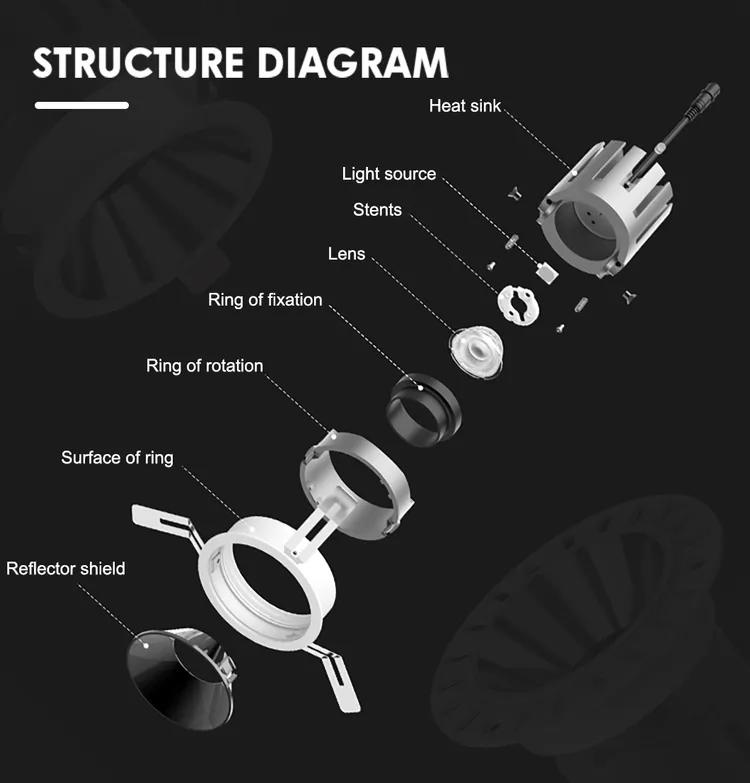
An LED luminaire is a complete lighting system made up of electrical, optical, thermal, and mechanical components.
Each component has a specific function, but the performance of the finished luminaire depends on how these parts work together.
Understanding the basic component structure helps lighting designers, engineers, and purchasing teams communicate more effectively during product development and component selection.
1. LED Light Sources
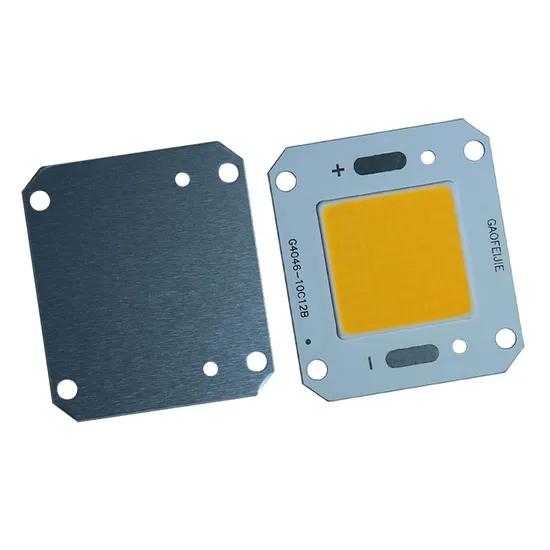
The LED light source generates light when electrical current passes through semiconductor materials.
Common light source formats include LED packages, COB (Chip on Board) modules, and LED arrays mounted on printed circuit boards.
The appropriate source depends on the required light output, color quality, package size, operating conditions, and intended application.
LED source selection should be coordinated with the optical system, thermal design, and driver.
2. LED Drivers
An LED driver supplies and regulates the electrical power required by the LED source.
Constant-current drivers regulate output current within their specified operating range. Constant-voltage drivers provide a regulated voltage for compatible loads, such as certain LED strip systems with suitable current-limiting arrangements.
Important selection factors include:
- Input voltage and frequency.
- Output current or voltage.
- Operating power range.
- Dimming method and compatibility.
- Electrical safety and protection.
- Environmental and thermal conditions.
Electrical compatibility should be confirmed using the specifications of both the driver and the LED load.
3. Thermal Components
LEDs generate heat during operation. Thermal components transfer this heat away from the source and help maintain suitable operating temperatures.
Typical thermal components include heat sinks, mounting boards, thermal interface materials, and thermally conductive structural parts.
Aluminum heat sinks are widely used in many lighting applications because of their useful thermal and manufacturing characteristics.
The effectiveness of the thermal system depends on the entire heat-transfer path, not simply the size of the heat sink.
4. Optical Components
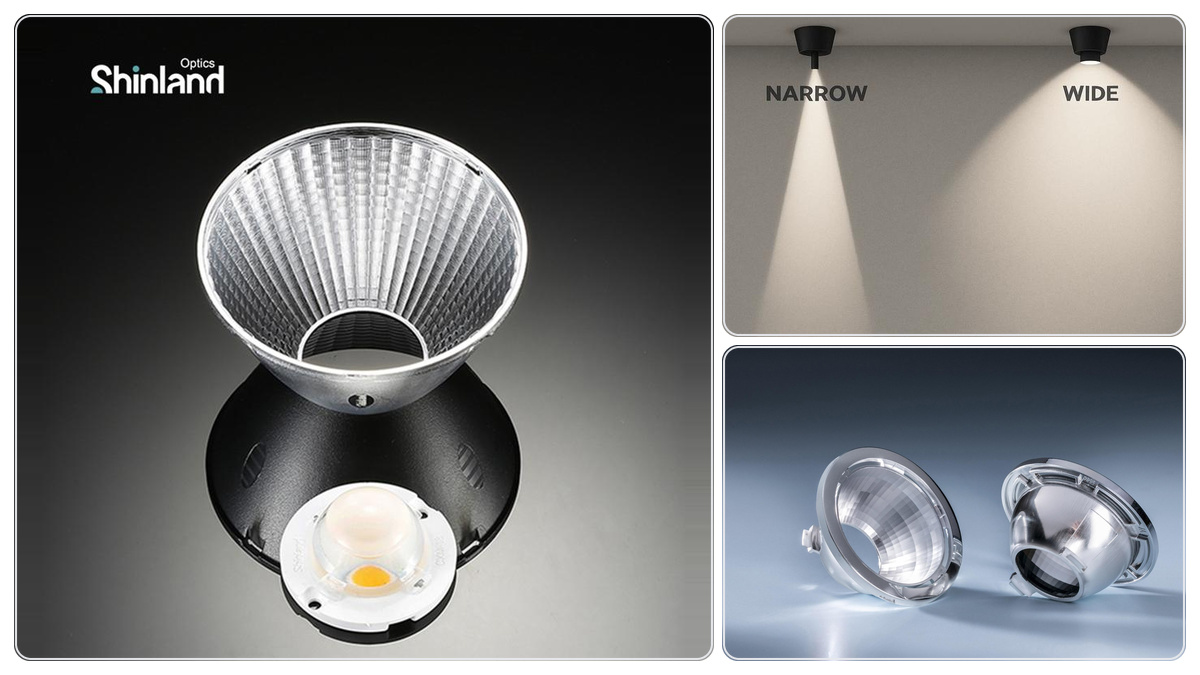
Optical components control how light is distributed.
Common examples include:
- Reflectors.
- Lenses.
- Diffusers.
- Optical covers.
- Baffles and anti-glare structures.
Different applications require different distributions. A spotlight may need directional light for accent illumination, while a panel light may require a more uniform output over a larger area.
The optical system should be selected according to the intended visual effect and verified as part of the complete luminaire.
5. Mechanical Components
Mechanical components provide structure, protection, mounting, and positioning.
Examples include housings, face rings, brackets, mounting springs, aluminum profiles, sheet metal parts, and fasteners.
Mechanical design influences installation compatibility, component alignment, assembly time, and serviceability.
It also establishes the positions of the LED source, optical components, and heat sink.
6. How the Components Work Together
A well-designed LED luminaire requires coordination between four main functions:
Electrical: Supplies and controls the LED’s operating power.
Optical: Directs light toward the intended area.
Thermal: Transfers heat away from heat-generating components.
Mechanical: Supports and positions the components while meeting installation and protection requirements.
A change to one component can affect the others. For example, a different LED package may require a new optical arrangement or thermal interface.
Conclusion
LED luminaires combine light sources, drivers, optical components, thermal components, and mechanical structures into one system.
Understanding the function of each component makes it easier to select compatible parts, evaluate design changes, and communicate technical requirements between suppliers and manufacturers.
The most effective approach is to consider component compatibility from the beginning of the design process.