Introduction
Lighting components are produced using a range of manufacturing processes. The appropriate process depends on the component’s geometry, material, dimensional requirements, appearance, production volume, and cost target.
Understanding common manufacturing methods helps product designers select suitable materials and develop components that are practical to manufacture.
This article introduces four processes commonly relevant to metal lighting components: extrusion, die casting, CNC machining, and sheet metal fabrication.
1. Aluminum Extrusion
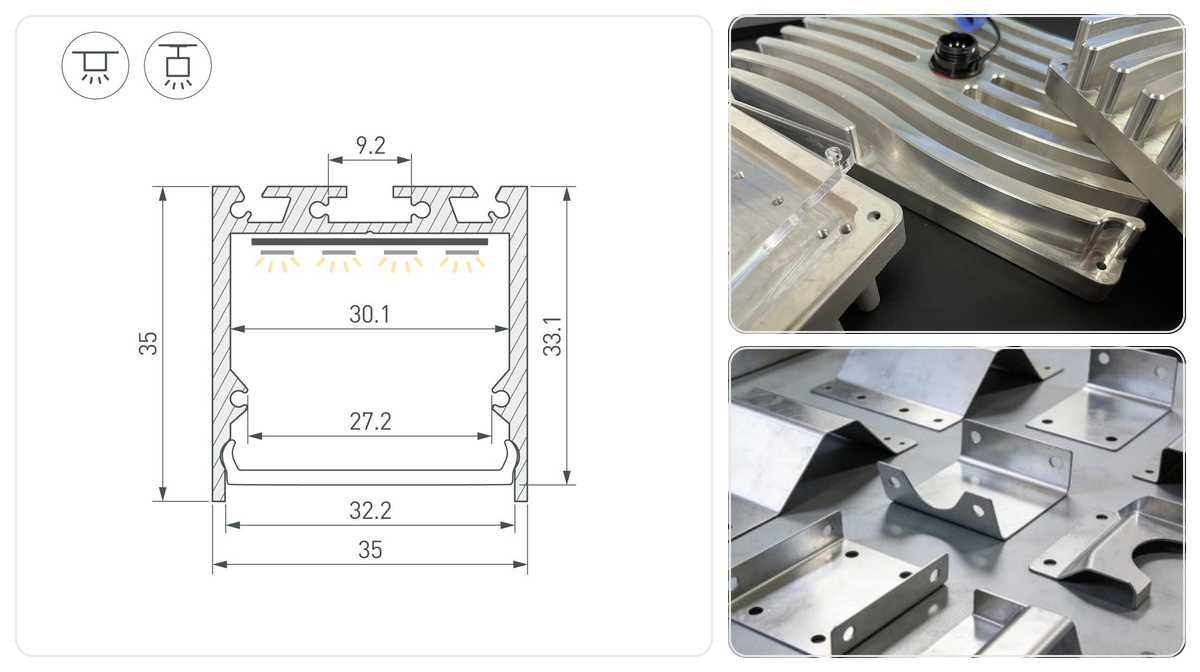
Aluminum extrusion produces profiles by forcing heated aluminum alloy through a shaped die.
It is particularly useful for components with a consistent cross-section along their length, such as linear lighting profiles and certain heat sink designs.
Potential advantages include:
- Efficient production of suitable long profiles.
- Flexibility in cross-sectional geometry.
- A wide range of possible profile dimensions.
- Compatibility with cutting and secondary machining operations.
After extrusion, profiles may be cut to length, drilled, machined, anodized, or finished using other suitable processes.
The design must account for the capabilities of the extrusion process and the requirements of the final component.
2. Die Casting
Die casting forms metal parts by injecting molten metal into a reusable mold under controlled conditions.
It can be suitable for lighting housings, structural parts, and certain heat sink geometries that benefit from an integrated shape.
Potential advantages include repeatability in qualified production and the ability to combine several features into a single component.
However, the process requires tooling investment and careful consideration of wall thickness, draft, material flow, and casting quality.
Die casting is not automatically the lowest-cost option for every design. Production volume and part complexity should be considered.
3. CNC Machining
CNC machining removes material from a workpiece using computer-controlled cutting tools.
It is useful for prototypes, low-volume components, and features that require specific dimensional control.
Common operations include milling, drilling, turning, and other cutting processes.
CNC machining allows flexibility when a design changes during development. However, complex geometries can require multiple setups, longer machining times, or specialized fixtures.
Material utilization and production time are important factors when evaluating cost.
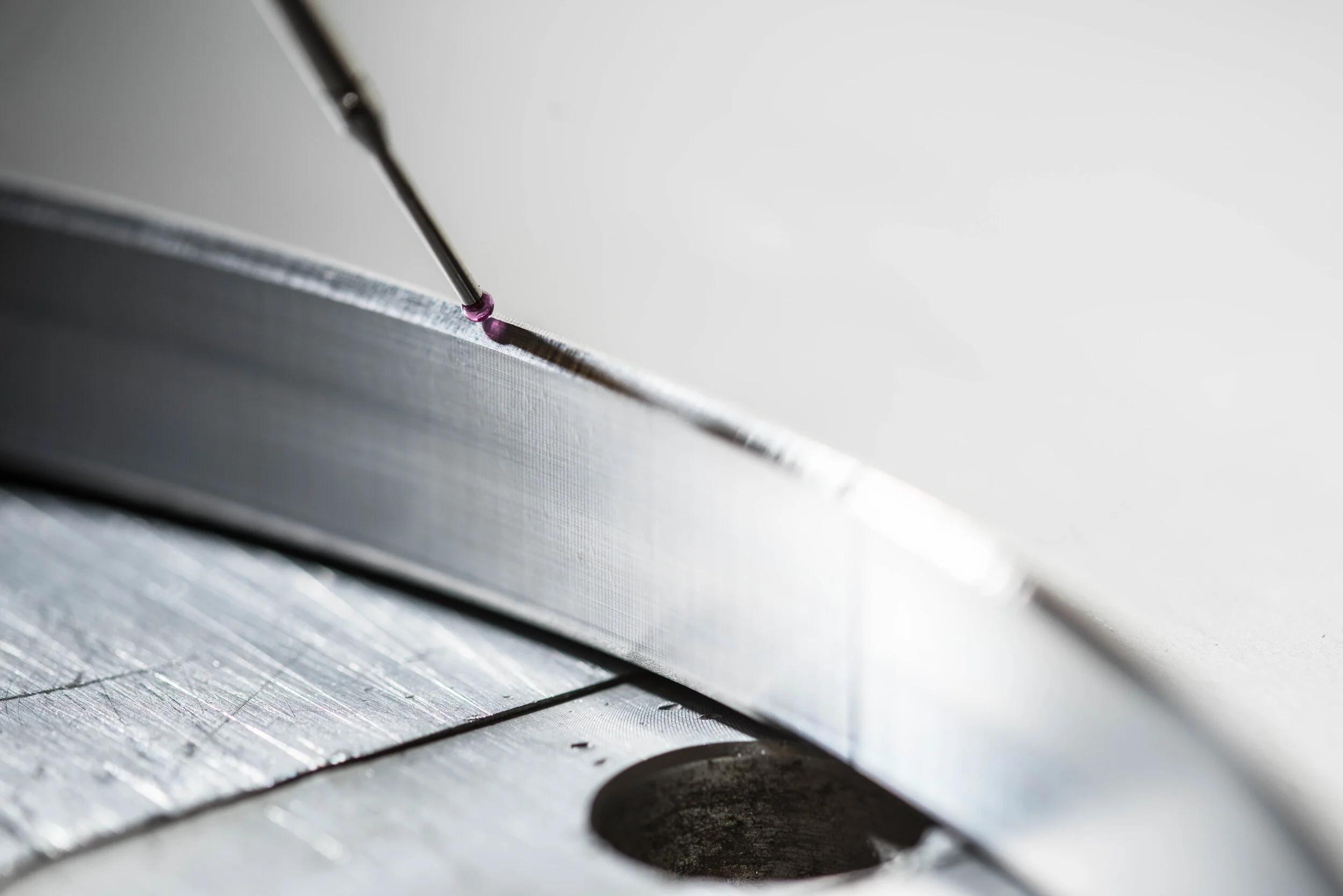
4. Sheet Metal Fabrication
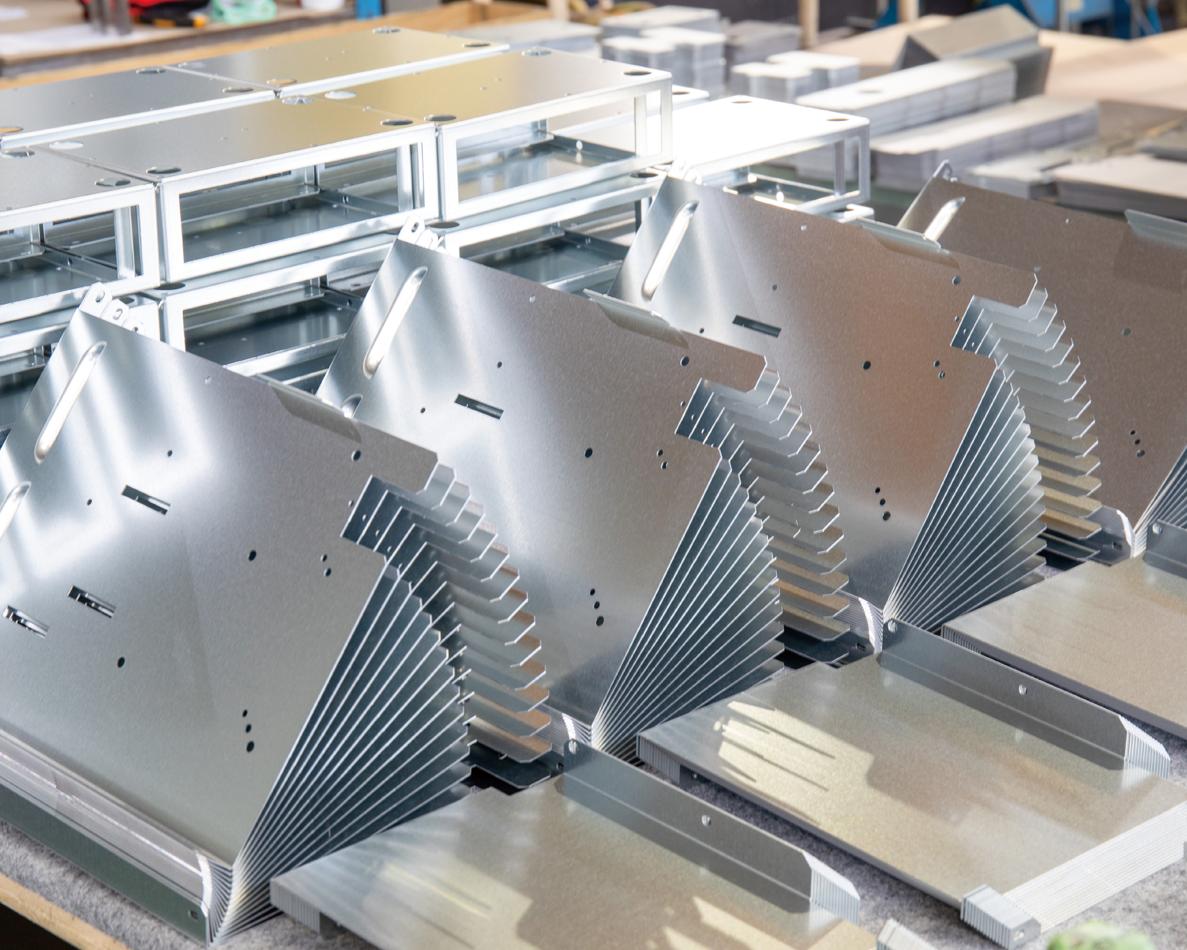
Sheet metal components are produced from metal sheets through operations such as cutting, punching, bending, and forming.
This approach is commonly used for brackets, covers, mounting plates, reflectors in suitable constructions, and other structural parts.
Design considerations include:
- Material thickness.
- Bend radius and bend allowance.
- Hole-to-edge distances.
- Mounting geometry.
- Burr control and edge quality.
- Surface treatment and corrosion protection.
Designing parts with the manufacturing process in mind can reduce unnecessary complexity and improve assembly consistency.
5. Comparing Manufacturing Processes
| Process | Typical design fit | Important consideration |
|---|---|---|
| Aluminum extrusion | Constant-section profiles | Profile geometry and secondary operations |
| Die casting | Integrated and relatively complex cast shapes | Tooling, casting design, and production volume |
| CNC machining | Precision features and flexible low-volume production | Cycle time, material removal, and workholding |
| Sheet metal fabrication | Thin-wall brackets, covers, and formed parts | Bending geometry, thickness, and assembly |
These processes are not always alternatives to one another. A single lighting product may combine extruded profiles, machined interfaces, die-cast parts, and sheet metal components.
6. How to Select a Manufacturing Process
A practical selection process should begin with the function of the part.
First, identify the mechanical, thermal, dimensional, and appearance requirements. Then assess which processes can meet those requirements.
Next, consider production volume, tooling cost, material utilization, finishing requirements, inspection, and assembly.
For a new design, prototype production may use a different process from the final mass-production route. The transition should be evaluated to ensure that the production component continues to meet the original requirements.
Conclusion
Manufacturing process selection affects the design, cost, quality, and production feasibility of lighting components.
Extrusion, die casting, CNC machining, and sheet metal fabrication each have distinct strengths. Understanding their capabilities allows manufacturers to make informed decisions and develop components that balance functionality with manufacturability.