Introduction
LED lighting is widely used because of its energy efficiency, compact size, and design flexibility. However, LEDs still generate heat during operation, and this heat must be managed appropriately.
Thermal management affects LED operating conditions, light output stability, component reliability, and the design of the complete luminaire.
For lighting manufacturers, understanding the thermal path is an important step in developing reliable LED products.
1. Why Does LED Lighting Need Thermal Management?
Not all electrical energy supplied to an LED is converted into visible light. Some energy becomes heat within the LED package and associated components.
If heat is not transferred away effectively, the temperature of the LED junction may rise beyond the intended operating range.
Higher operating temperatures can accelerate light-output degradation and affect color stability and the reliability of other components.
Thermal design therefore needs to be considered from the early stages of product development.
2. Understanding the Thermal Path
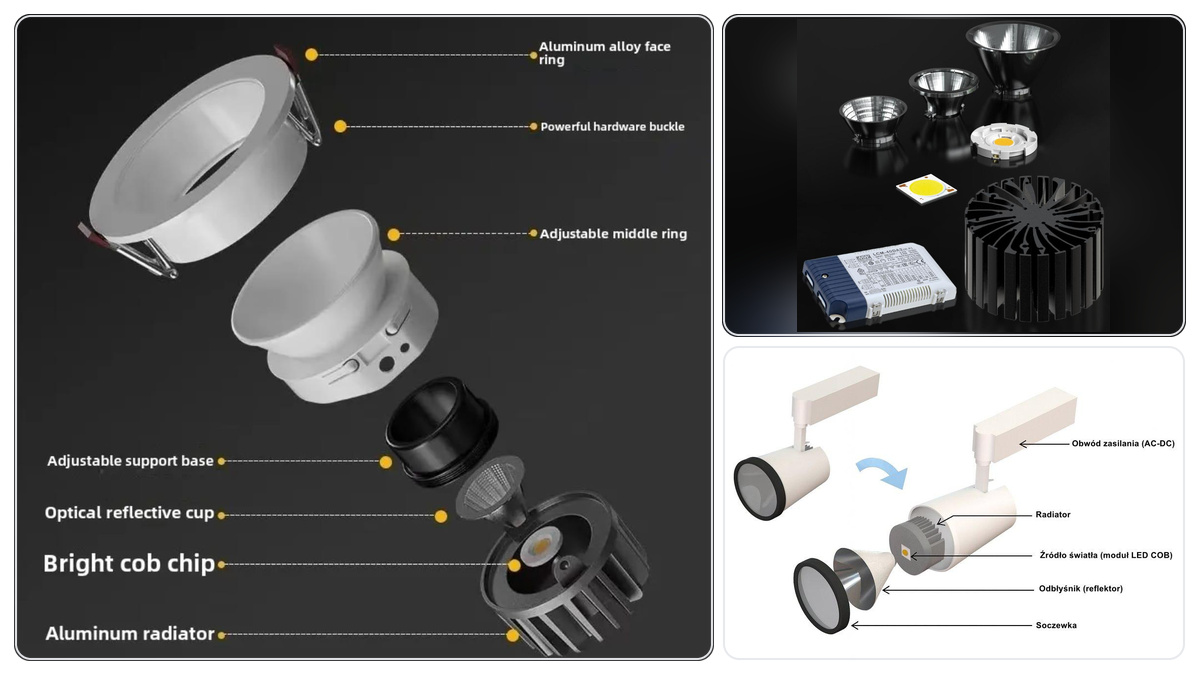
A typical LED spotlight transfers heat through several connected elements:
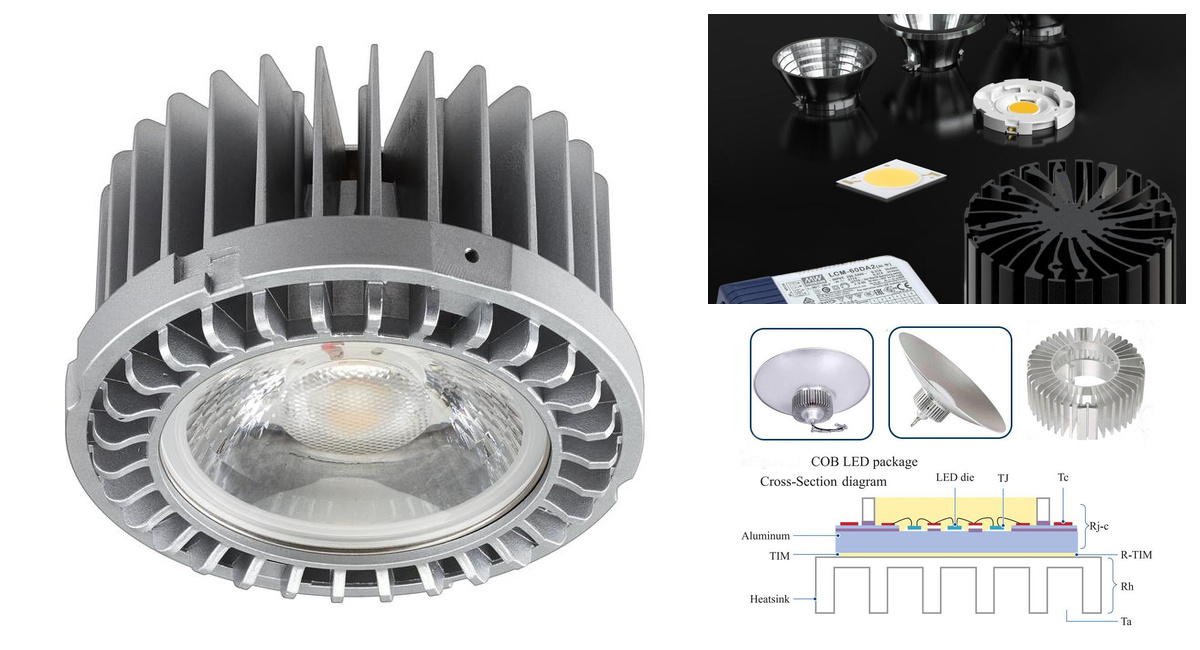
LED package → mounting board → thermal interface → heat sink → surrounding environment
The mounting board may be an MCPCB or another suitable substrate. A thermal interface material may be used between the board and the heat sink, depending on the design.
Every interface can influence heat transfer. Poor contact, unsuitable materials, or inconsistent assembly can increase thermal resistance.
The thermal path should therefore be treated as a complete system rather than a heat sink problem alone.
3. The Role of the Heat Sink
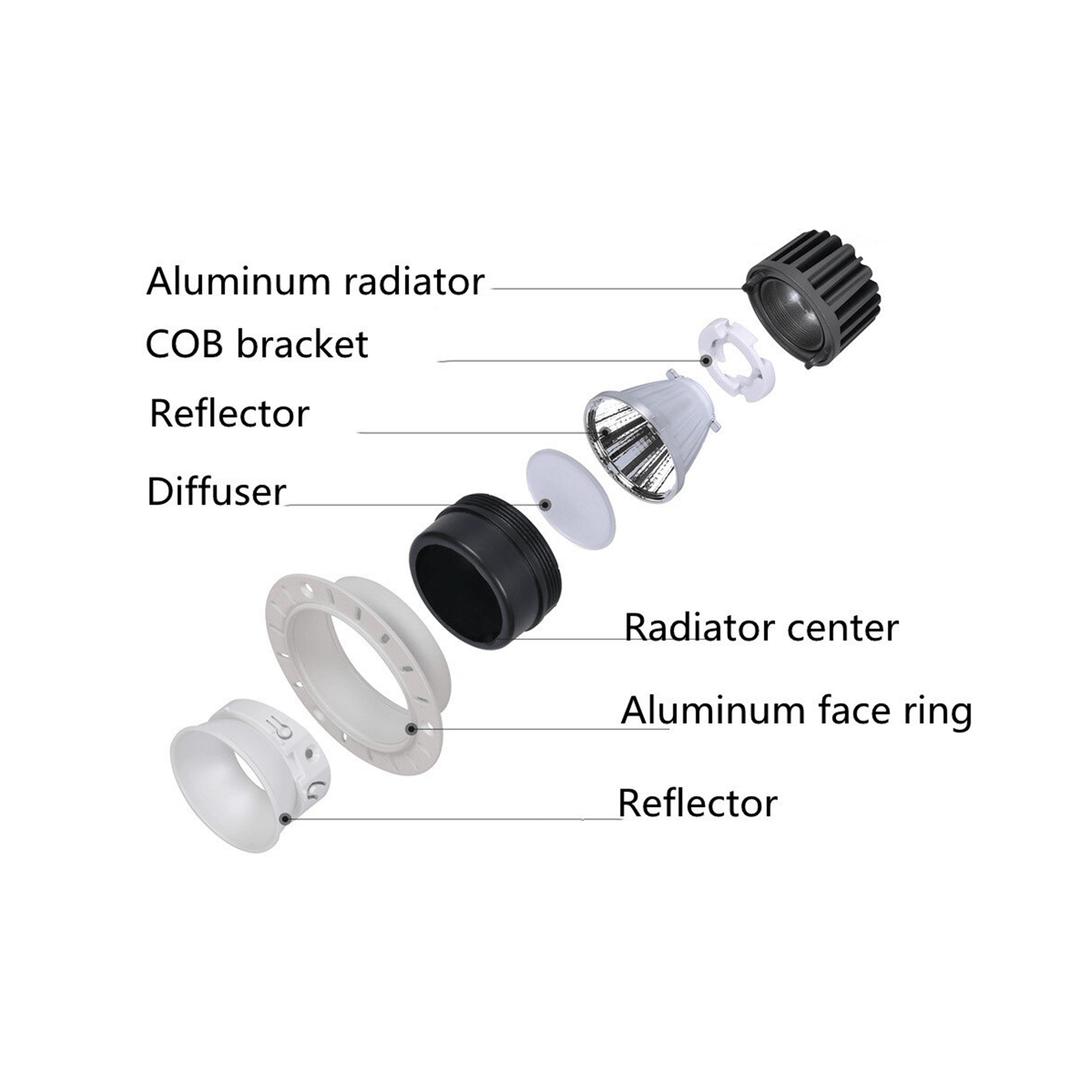
A heat sink transfers heat away from the LED assembly and releases it into the surrounding environment.
Aluminum is commonly used in lighting applications because it combines useful thermal conductivity with relatively low weight and established manufacturing processes.
Heat sink designs vary according to the available space, required thermal performance, mechanical structure, and production method.
Common design features include fins, grooves, mounting surfaces, and different overall heights.
More material does not automatically mean better performance. Geometry, airflow, contact quality, and installation conditions also matter.
4. Thermal Interface Materials
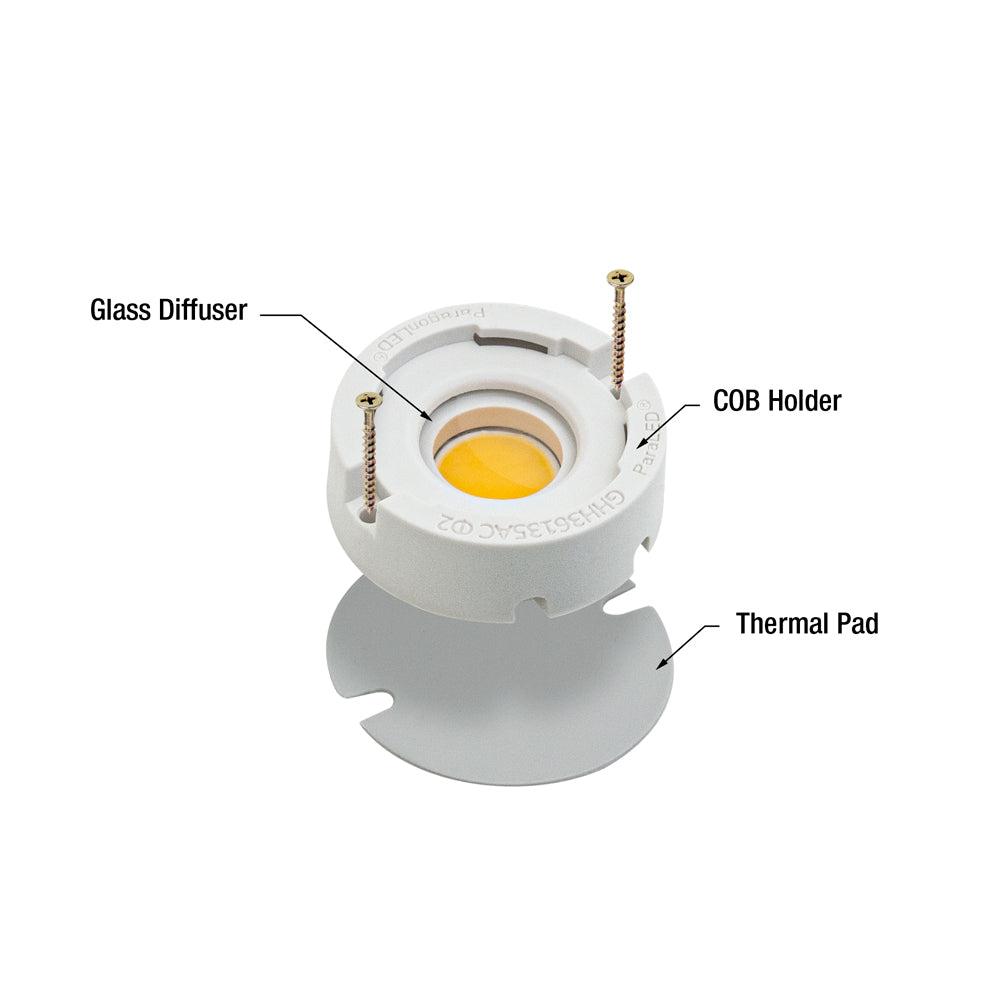
The interface between an LED mounting board and a heat sink can contain microscopic gaps that impede heat transfer.
Thermal grease, pads, or other interface materials may help reduce the effect of these gaps.
The appropriate material depends on the required thermal performance, electrical isolation requirements, mechanical arrangement, and operating environment.
Application thickness and mounting pressure should also be controlled where they affect performance.
5. Thermal Design Considerations
During product development, engineers should consider:
- LED operating current and power.
- LED package thermal specifications.
- Heat sink geometry and material.
- Contact surfaces and interface materials.
- Ambient temperature and airflow.
- Installation depth and enclosure design.
- Driver temperature and the proximity of other heat-generating components.
Thermal validation should be performed under defined operating conditions. A component’s surface temperature should not automatically be treated as the LED junction temperature.
6. Why Thermal Design Matters for Product Reliability
A luminaire is a system of interconnected components. Even when the LED source is suitable, poor heat management or an unsuitable driver can limit overall reliability.
Good thermal design requires the LED source, mounting board, heat sink, driver, and housing to work together within their intended operating limits.
Conclusion
Thermal management is a fundamental part of LED luminaire design. An appropriate heat sink, effective thermal interfaces, suitable materials, and a well-designed enclosure all contribute to the thermal performance of the finished product.
Considering these factors early can help lighting manufacturers avoid unnecessary redesign and improve product consistency.